Blanding's Turtle Watch Program
Protecting Turtles Together
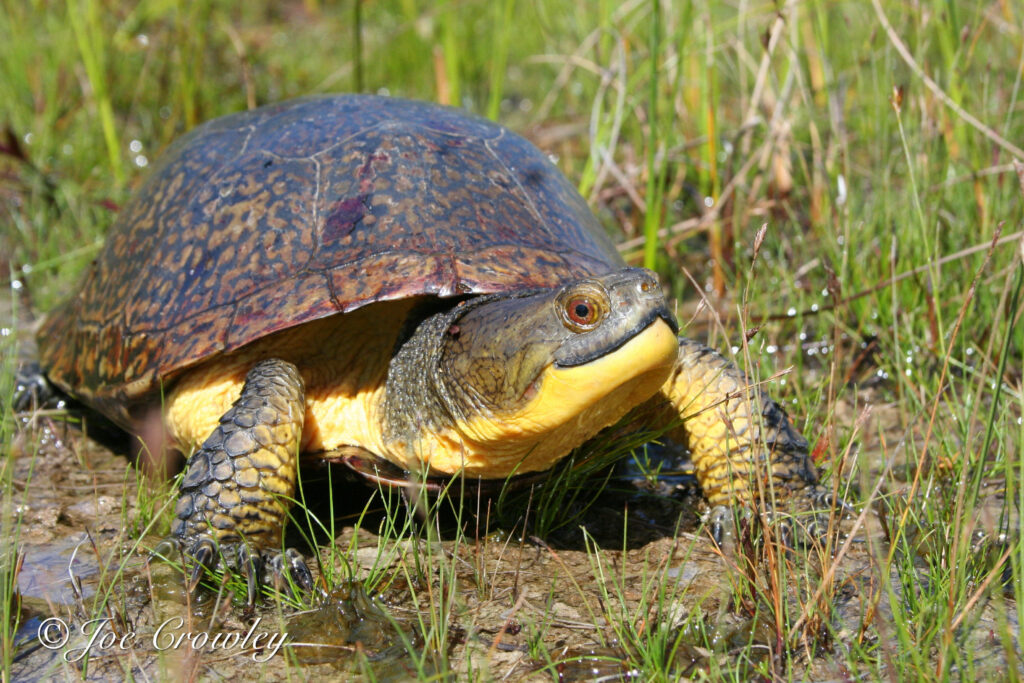
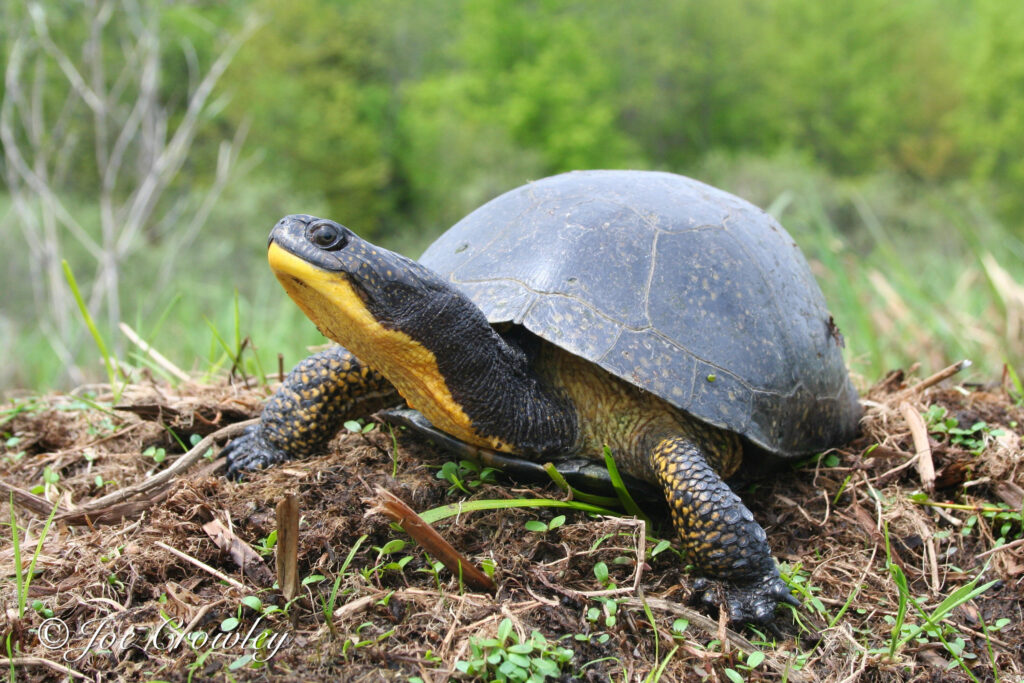
Blanding’s Turtles are one of Ontario’s most recognizable species at risk, known for their bright yellow throat and distinctive “smiley face”. Despite their unique appearance, they are often difficult to find and face numerous threats, including habitat loss, road mortality, and illegal collection.
The goal of the community Blanding’s Turtle Watch program is to better understand where these turtles live and identify important habitats that require protection. By reporting your sightings, you can help researchers and conservation practitioners monitor populations, track changes in distribution, and support recovery efforts.
Whether you encounter a Blanding’s Turtle in a wetland, crossing a road, or basking along the shoreline, your observation can provide valuable information. We encourage participants to submit sightings, photographs, and location details through our reporting tools so that these records can contribute to ongoing conservation and research initiatives.
Every sighting counts and can help protect Ontario’s “smiling turtle” for future generations.
Blanding's Turtles in Niagara Region
Blanding’s Turtles have been documented at several locations throughout the Niagara Region, with new observations continuing to be reported through both research projects and community monitoring efforts. As development pressures increase across Niagara, it is becoming increasingly important to understand where species at risk occur and which habitats they rely on.
Information collected through the Blanding’s Turtle Watch program will help identify important turtle habitats and contribute to conservation planning and environmental decision-making. Because Blanding’s Turtles are listed as Threatened in Ontario and Endangered in Canada, any impacts to their populations or habitat are of significant conservation concern.
While this project focuses on Blanding’s Turtles, observations of all turtle species are encouraged. Every turtle species native to Ontario is considered a species at risk or a species of conservation concern, and information on their distribution, nesting areas, road crossings, and habitat use can help support future conservation efforts throughout the region.
Your observations can help ensure that important wildlife habitats are identified, documented, and considered before development occurs.
What should you look for?
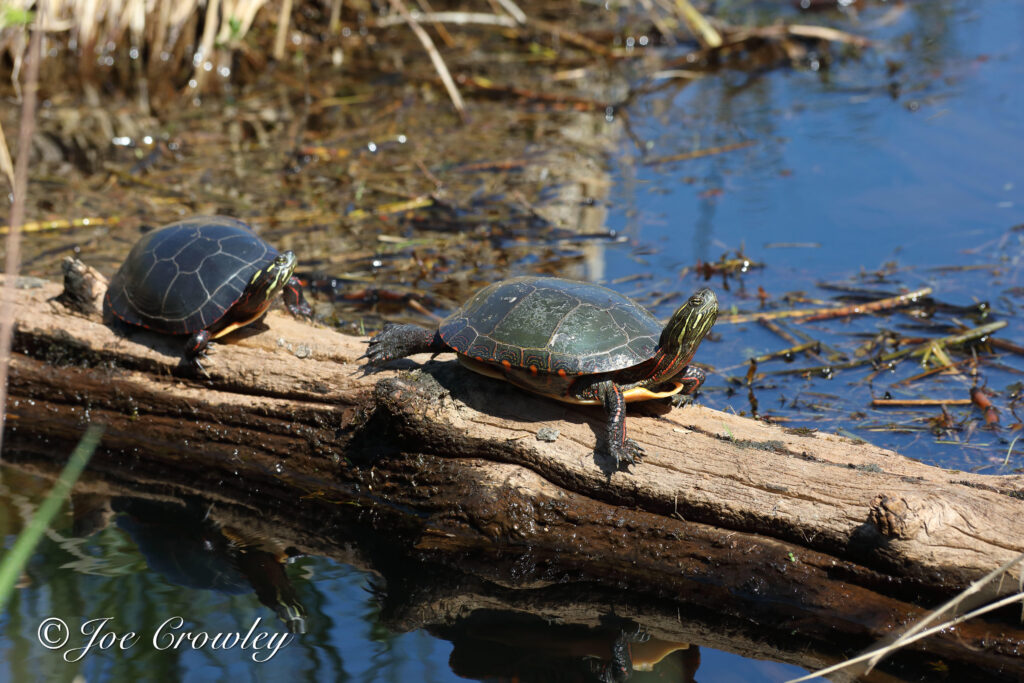
- Turtles basking on logs, rocks, or along the edges of wetlands.
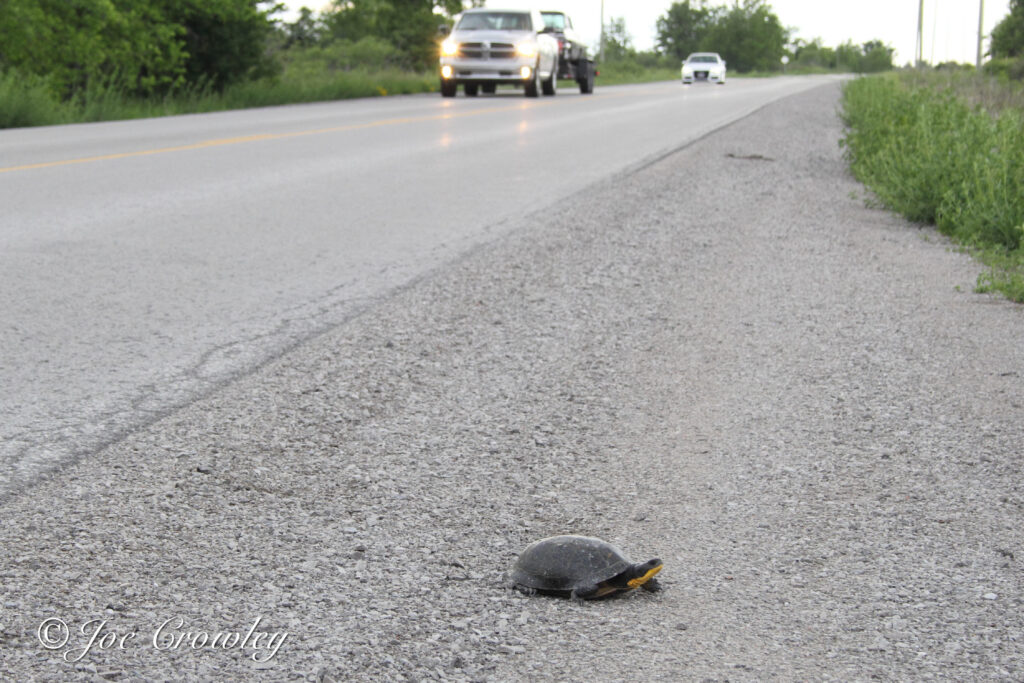
- Turtles crossing roads, especially during spring and early summer when they move between wetlands or travel to nesting areas.
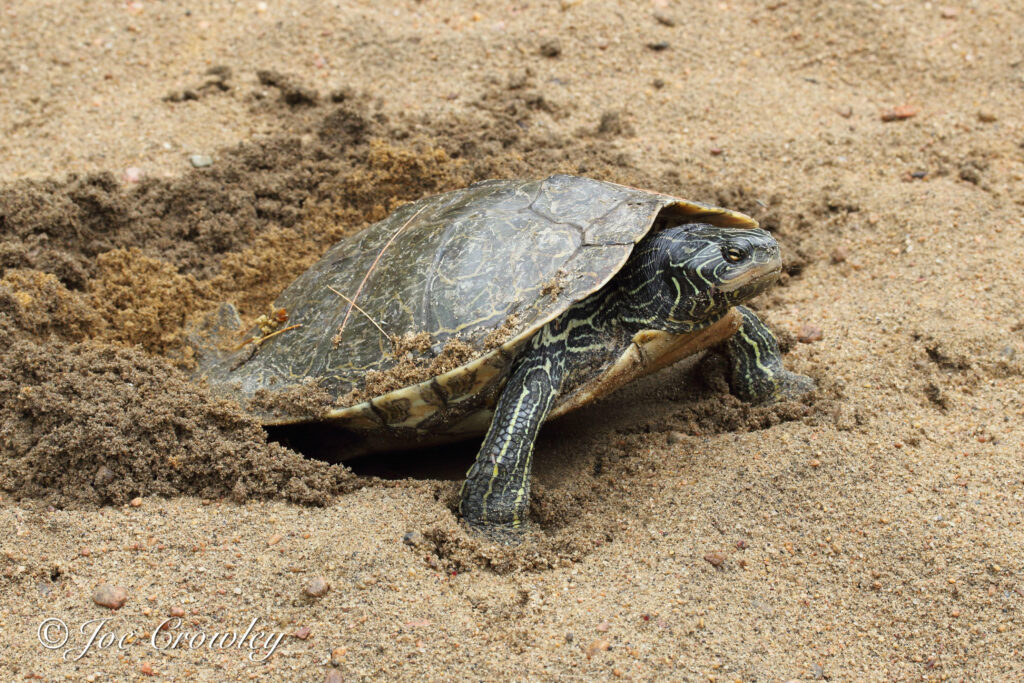
- Nesting females in May and June, often found in open, sunny areas with gravel, sand, or loose soil.
- Turtles often try nesting on the side of roads, where the gravel is loose.
- Hatchlings and young turtles emerging from nests or moving through nearby habitats.
- Evidence of turtle activity, such as nests, eggshell fragments, tracks, or road-killed turtles.
- Important habitat features, including marshes, swamps, ponds, wet meadows, and connecting corridors between wetlands.
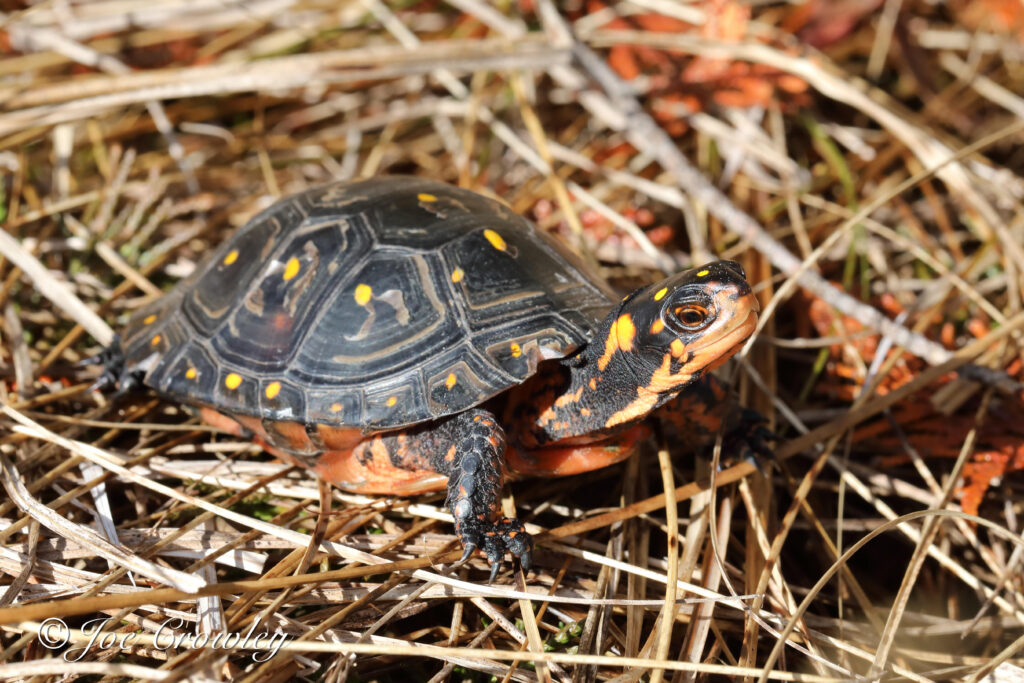
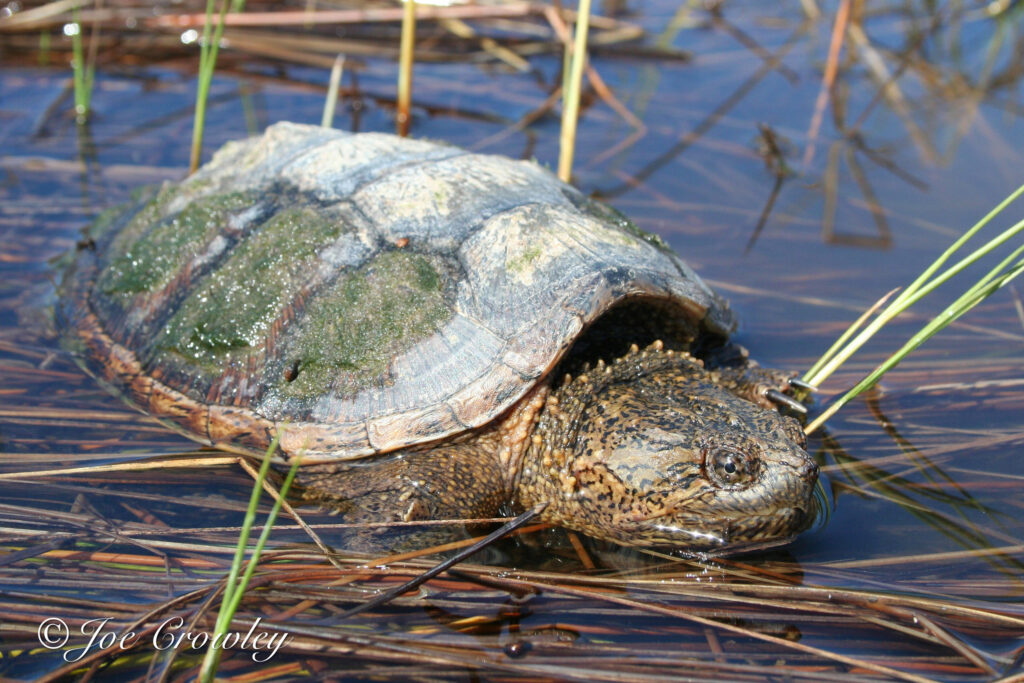
You may also wish to report observations of any turtle species, including Snapping Turtles, Painted Turtles, Spotted Turtles, and Map Turtles. Information on all turtle species helps improve our understanding of local populations and supports conservation efforts across the Niagara Region.
What should you report?
When submitting an observation, please include as much information as possible:
- Date and time of the observation
- Location (GPS coordinates, address, or a detailed description)
- Species observed (if known)
- Number of individuals
- Photos of the animal or habitat, if available
- Behaviour or activity, such as basking, nesting, crossing a road, or feeding
- Any other relevant details that may help us better understand the observation
Even if you are unsure of the species, please submit your observation. Our team can help with identification, and every record contributes to conservation efforts.